Reviewed · PRIVATE
Introductory Semi-Private Kitesurf Lesson
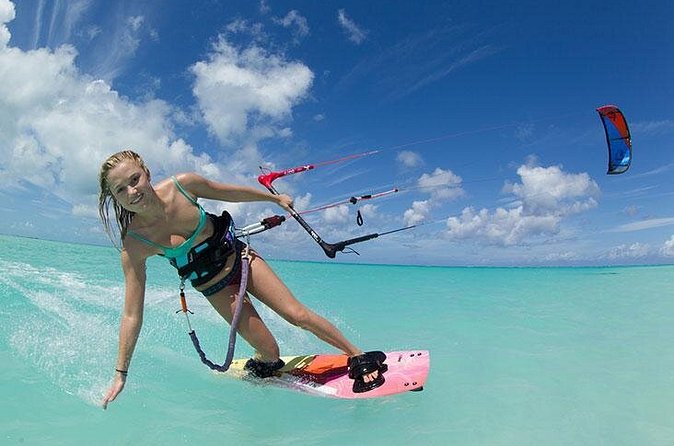
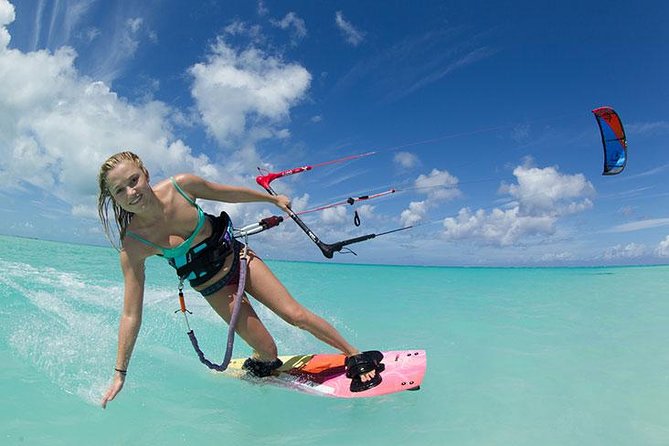
Kitesurfing in Grand Cayman gets you off the beach and into the wind fast. In this two-hour semi-private lesson, you learn kite control first, then use the board for your first water starts. The Cayman setting can offer clear, shallow water and steady wind, which gives a beginner room to concentrate without fighting large waves.
I like the one-instructor, two-person setup, since you get far more attention than in a big class. I also like that the $400 price covers the group, equipment, and selected-hotel pickup, making it $200 per person when two people share. The catch is that you share the kite and board, so your active time may be less than in a private lesson, and wind conditions can affect what you accomplish.
Key points to know before you book
- Two people share one lesson: The $400 rate covers your group of up to two, making it a practical choice for couples, friends, or parent-and-child pairs.
- Kite control comes before board work: Expect to learn how to fly, handle, and steer the kite before attempting water starts.
- Shallow water helps beginners: The teaching area has been described as calm, clear, and knee-deep in places, useful when you are learning the basics.
- Pickup is included at selected hotels: Cruise passengers can also request pickup by supplying ship and port timing details.
- Instructors focus on patient teaching: Pedro, Louis, Will, Jhon, and Miguel have all been associated with instruction at this operation.
- Weather controls the schedule: You can receive a full refund if poor weather forces cancellation, but your own cancellation must be made at least 24 hours ahead.
Why this two-hour lesson works for first-time kiters
Kitesurfing looks simple from the beach. Hold the kite, catch the wind, ride away. In practice, the kite is powerful, and the first useful skill is controlling that power without letting it pull you off balance.
This lesson sensibly begins on kite handling. You learn how the kite moves through the wind window, how to steer it, and how to manage the lines. Those early exercises may not look as exciting as standing on a board, but they are the part that lets you progress safely.
Once your kite skills are ready, the instructor introduces the board and works toward the first water starts. You may get a few short runs, or you may spend much of the session refining kite control. That depends on your comfort, the wind, and how quickly the basic movements come together.
The lesson lasts about two hours. That is enough time for a strong introduction, but not enough to promise independent riding for every beginner. One person with previous kite experience reached upwind and downwind riding after several lessons, while other beginners reported standing on the board during an introductory session. Those outcomes show the range clearly: you might get up on your first day, but a single lesson is best viewed as a starting point.
A few more things to do in Grand Cayman worth a look
- Private Swim Lesson or Triathlon Training on Seven Mile Beach!
★ 5.0 · 6 reviews
Sharing one instructor, kite, and board
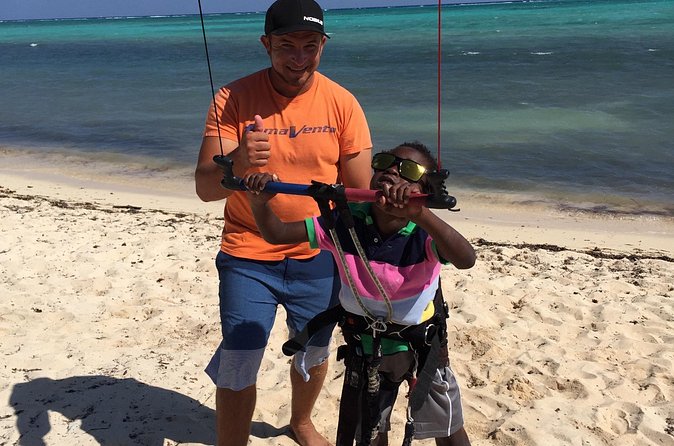
The semi-private format is the main value of this activity. You and one other person form the entire group, so the instructor can watch your technique closely and give corrections that would be hard to provide in a large class.
The $400 price is per group, not per person. With two people booking together, the cost works out to $200 each. That is a meaningful saving over two separate private lessons, especially since equipment and selected-hotel transportation are included.
The trade-off is simple. You share the kite and board, so you will not be practicing continuously for the full two hours. You may alternate with your partner while the instructor supervises. This can be a good rhythm for beginners because it gives you a short rest and lets you watch the correct movement before trying it yourself.
Choose your partner carefully. A couple with similar fitness and confidence levels may progress smoothly together. If one person has prior kite experience and the other is starting from zero, a private lesson may produce faster progress for the more advanced participant. One person who enjoyed the semi-private introduction later recommended a private lesson for faster improvement.
What happens from pickup to first water start
Pickup and drop-off are offered at selected hotels. The exact pickup arrangement depends on your accommodation, so confirm that point at booking rather than assuming every property is covered.
Cruise passengers can also arrange the activity, but they must provide the ship name, docking time, disembarkation time, and re-boarding time when booking. That information matters because the lesson needs to fit around port access and your return-to-ship deadline.
The teaching area is described as a protected coastal spot with calm, clear, shallow water. One account places the kite area in a national seashore reached by the island’s only unpaved road. The listed location is Seven Mile Beach, so confirm the exact meeting point and route with the operator, particularly if you are arranging your own transportation.
At the beach, the instructor sets up the included equipment and begins with the kite. You will practice launching and steering, then learn how small hand movements affect the kite’s position and pull. The instructor’s job here is not only to get you moving, but to help you understand how to stop or reduce the kite’s power.
When you show control, the board enters the lesson. The goal is a water start, followed by short board runs if everything clicks. Shallow water is useful at this stage because you can regain your footing without a long swim after each attempt.
The Cayman water setting helps, but wind still decides the day
The Cayman Islands are a natural fit for a first lesson when the conditions cooperate. Clear water lets you see the bottom and your board, while shallow sections allow the instructor to walk out with you. Calm water also removes one of the biggest beginner problems: trying to learn kite control while waves are knocking you around.
The setting is not a guarantee of instant success. Kitesurfing requires wind, and the operator can cancel for poor weather. If that happens, you are offered another date or a full refund.
This weather policy is important when planning a short cruise visit or a tightly scheduled vacation. Book early enough to leave room for a second possible date if your schedule allows. The activity is often booked about 30 days ahead, so waiting until the last minute may leave you with fewer options.
The same wind that makes the lesson possible can also change its pace. A light or shifting breeze may keep the class focused on kite skills. Stronger conditions can bring more power, but that does not automatically make them better for a first-timer. The instructor decides what is suitable for the conditions and your ability.
Same island, a different sort of day:
- Stingray City Experience Plus Two Snorkeling Stops on Grand Cayman
★ 5.0 · 1,477 reviews - Starfish Point, Stingray City & Coral Garden (3-STOP Adventure)
★ 4.5 · 1,168 reviews - Night Bioluminescence Snorkel Tour
★ 5.0 · 987 reviews - Stingray City and Starfish Experience with Coral Reef Snorkeling
★ 4.5 · 924 reviews
The instructors and teaching style
The school’s teaching team includes Pedro, Louis, Will, Jhon, and Miguel. Accounts of the instruction repeatedly point to patience, clear explanations, and close supervision.
Pedro has been praised for careful instruction and for helping beginners make progress in the water. Louis taught one couple who were both standing on the board by the end of their introduction. Will has taught returning participants over multiple days, while Miguel worked patiently with a 61-year-old beginner across a five-day program.
Jhon is involved in both instruction and the operation itself. He has also handled booking communication and paid close attention to conditions before sending people out. That is a useful sign for beginners who would rather have an honest weather call than a forced session.
These names do not mean you can select a particular instructor unless the operator confirms it. They do show that the school has a broader team, rather than relying on a single teacher. If a specific instructor matters to you, ask before booking.
Radios have also been used during instruction, giving the instructor a way to communicate while you are on the water. That can help when you move farther from shore or are concentrating too hard to keep looking back at the beach.
Who will get the most from this activity
This lesson suits a couple, two friends, or a parent and older child who want to try the sport together. One account describes a nine-year-old and a parent learning during the same session, while another family had teenagers progress through several lessons. The operator states that most participants can take part, but individual ability still matters.
You do not need to arrive as an experienced athlete. The lesson is built around beginners and starts with kite handling rather than sending you straight onto the board.
It is also a good choice if you want to test the sport before committing to several days of instruction. Kitesurfing has a learning curve, and the first session gives you a fair sense of how the kite feels, how much physical coordination it requires, and whether you want to continue.
Book more than one lesson if your goal is independent riding. Several people progressed to riding after multiple sessions, and one family reported that young participants were kiting on their own after about six hours of lessons. That is far more realistic than expecting to master the sport in two hours.
Price, value, and the private-lesson question
At $400 per group, the value depends on how you use the format. Two people sharing the lesson pay $200 each, with equipment and selected-hotel transport included. For a first taste of kitesurfing, that is a sensible way to limit the cost while keeping the group small.
The semi-private arrangement is strongest when both participants want the same kind of introduction. You can share the excitement, compare progress, and learn by watching each other. It also makes the lesson feel more personal than a large beach class.
A private lesson may be better if you have only one available morning, already have kite experience, or want uninterrupted practice. You pay more, but you remove the waiting time that comes with sharing equipment.
I would choose the semi-private option for a first attempt with a partner. If you enjoy it, book a private follow-up to improve faster. Some participants returned for a second day because the first session left them eager to continue.
Booking, cancellation, and practical planning
Confirmation is normally provided at booking. If you reserve within one day of the lesson, confirmation comes as soon as possible and depends on availability.
You can cancel for a full refund up to 24 hours before the scheduled start time. Cancellations or changes made within 24 hours are not accepted for a refund. The cut-off uses local Cayman time.
Because weather is central to the activity, avoid placing the lesson at the very end of your vacation if you can help it. A poor-weather cancellation brings a new date or a full refund, but a new date is useful only if you still have time on the island.
The operator supplies the equipment, so you do not need to arrange a kite or board rental for this introduction. If you later want to practice independently, ask the team about rental readiness and available equipment after your lesson. Several participants continued into rentals or extra instruction after building basic skills.
Should you book this Cayman kitesurf lesson?
Book it if you want a real introduction to kitesurfing rather than a quick ride behind a boat. The small group, shallow teaching water, included equipment, and patient instruction make this a strong first step.
Choose the semi-private format when two people want to learn together and are comfortable sharing practice time. Choose a private lesson instead if rapid progress matters more than the lower per-person cost.
Give yourself weather flexibility, and treat the first two hours as an introduction rather than a promise of full independence. If the wind cooperates and you enjoy the challenge, Grand Cayman offers a practical place to continue with more lessons.
FAQ
Where does the kitesurfing lesson take place?
The experience is listed at Seven Mile Beach in the Cayman Islands. The teaching area has also been described as a protected coastal spot with calm, clear, shallow water. Confirm the exact meeting point with Kitesurf Cayman when arranging your lesson.
How long is the lesson?
The lesson lasts approximately two hours.
How many people can join?
The $400 price covers a group of up to two people. It is a semi-private activity, and only your group participates.
Is equipment included?
Yes. The necessary kitesurfing equipment is included in the lesson price.
Is hotel transportation included?
Pickup and drop-off are included at selected hotels. Cruise ship passengers must provide their ship and port schedule details when booking.
What will I learn during the lesson?
You begin by learning how to fly, handle, and control the kite. Once your kite skills are ready, you work toward water starts and short board runs.
What happens if the weather is poor?
If the operator cancels because of poor weather, you can choose a different date or receive a full refund. You must cancel at least 24 hours before the start time to receive a full refund for your own cancellation.
Just added in Grand Cayman
- 2 Stop Reef Snorkel and Glass Bottom Boat Adventure★ 5.0 · 3 reviews
- Airport Transfers to East End Accommodations (GCM) – Round Trip★ 5.0 · 3 reviews
- Airport Transfer to West Bay Accommodations (GCM)-Round Trip★ 3.5 · 5 reviews
- Private Bioluminescent Bay Tour★ 5.0 · 6 reviews
- Cayman Combo Tour: Stingrays, Starfish Point and Crystal Caves★ 4.5 · 10 reviews
- Cayman Ultimate Tour: Stingrays, Starfish Point and Crystal Caves★ 4.0 · 10 reviews
- Diamonds and Cocktails a Shopping Experience in Grand Cayman★ 5.0 · 10 reviews
- Private Deep Sea Fishing Experience in Grand Cayman★ 5.0 · 6 reviews
Private, compared.
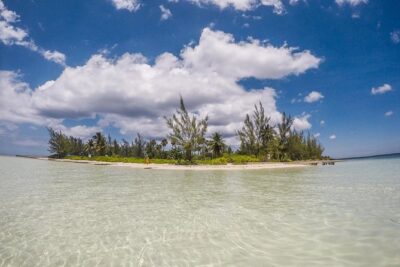
Private, luxury, custom charters to Stingray City, Snorkeling & More
Read our review →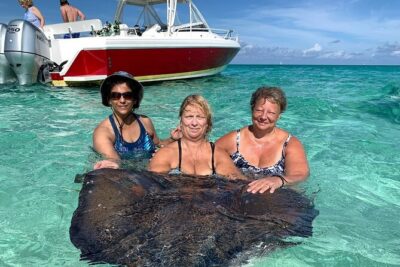
Private Half Day Stingray City, Snorkeling and Starfish Beach Tour
Read our review →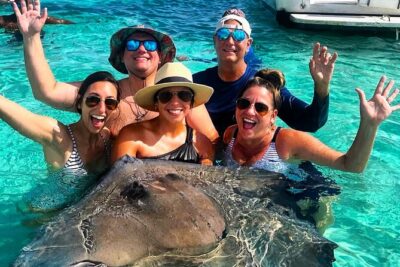
Private Charter 34ft Express Cruiser Stingay City Reef Snorkeling
Read our review →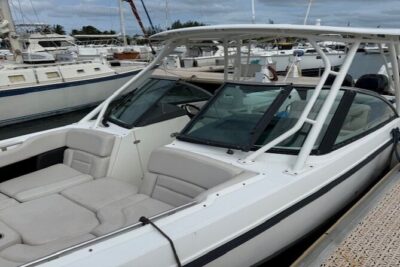
Stingray City, Star fish Point and Snorkeling Private Boat Tour
Read our review →
Private Stingray City and Snorkeling Half Day Charter for 6 Guest
Read our review →
Private Boat Tours: Customize Your Grand Cayman Adventure!
Read our review →